Wheel Redesign
Redesigned the rover's wheels for improved stiffness and ground clearance after the original design deformed under load and lost traction on rough terrain.
Wheel Redesign
Background
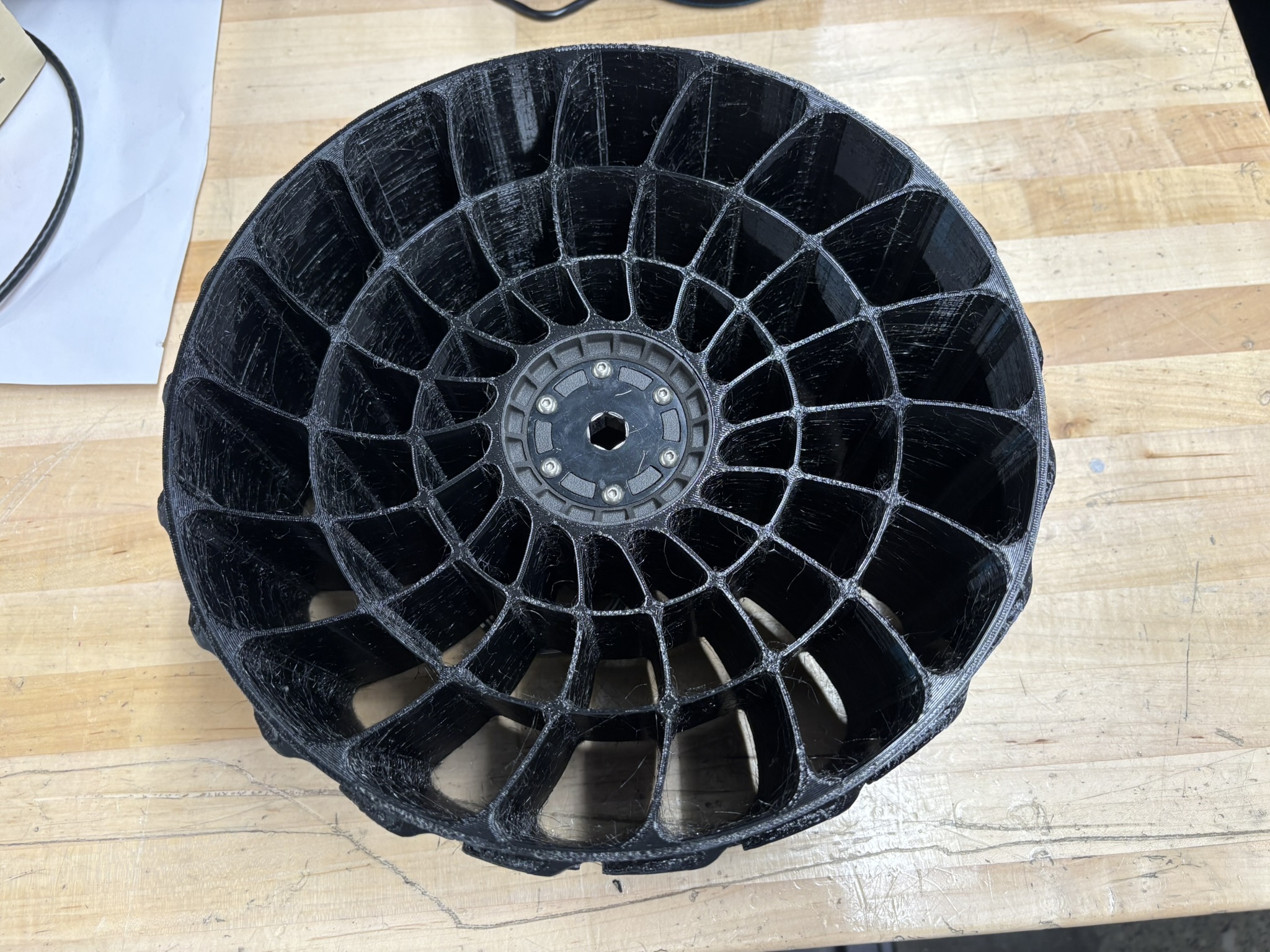
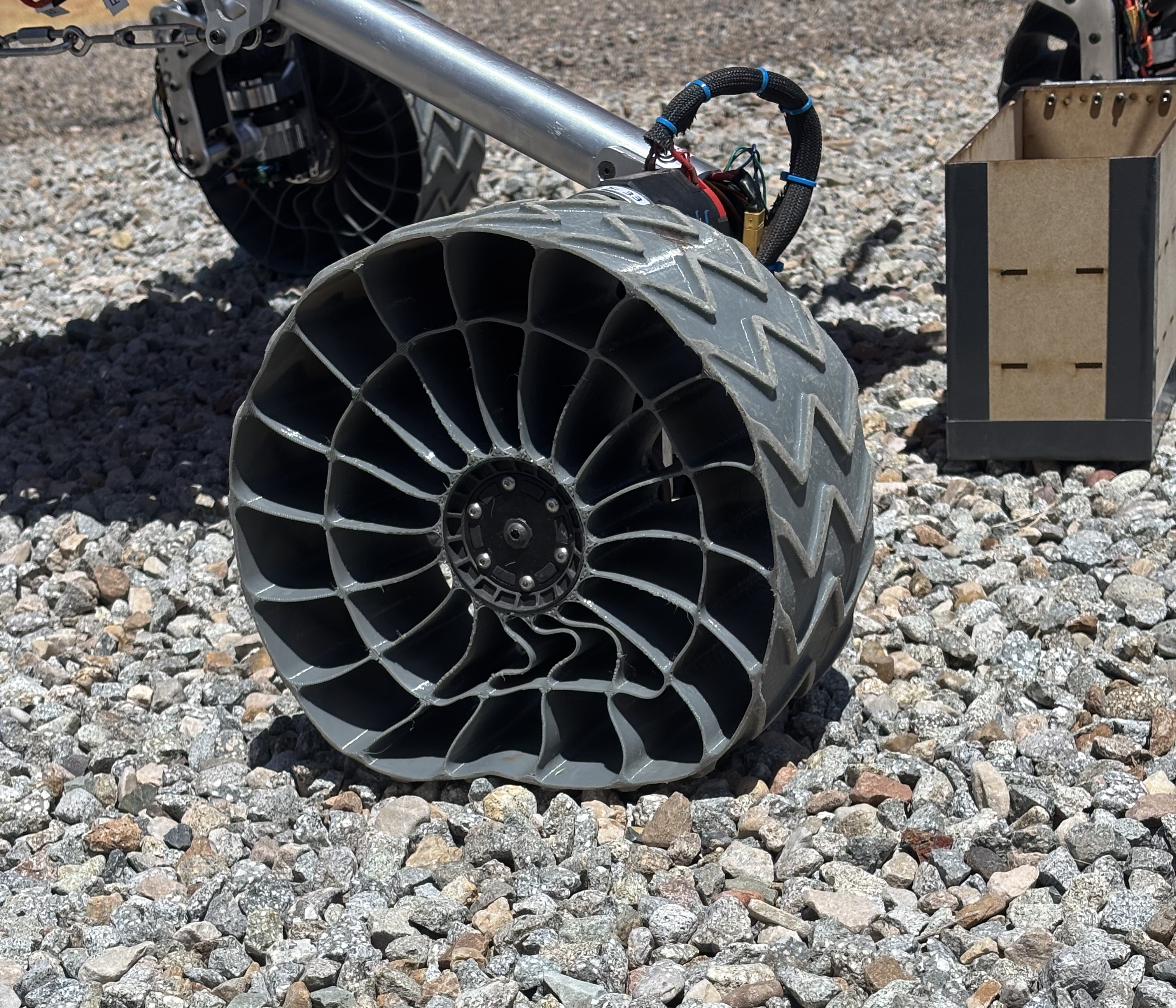
The rover's original wheels deformed under load and would interfere with ground clearance the life detection system — an issue that we ran into during the University Rover Competition in Utah. The lack of rigidity in the wheels also negatively affected maneuverability of the rover. I redesigned the wheels to improve stiffness and increae ground clearance, while reducing weight and improving traction. The new wheels had to hold their shape under load without compromising traction.
Design & Testing
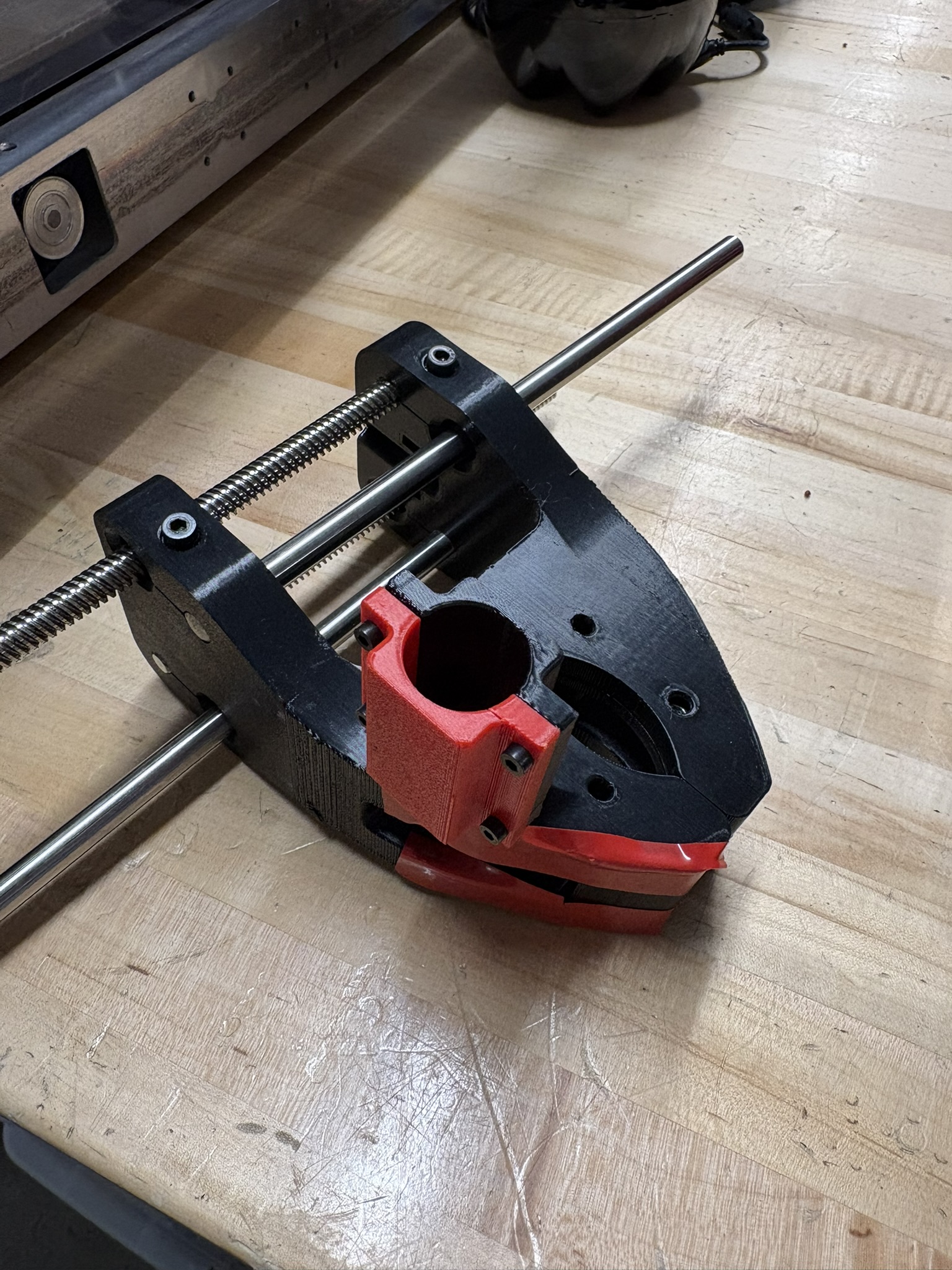
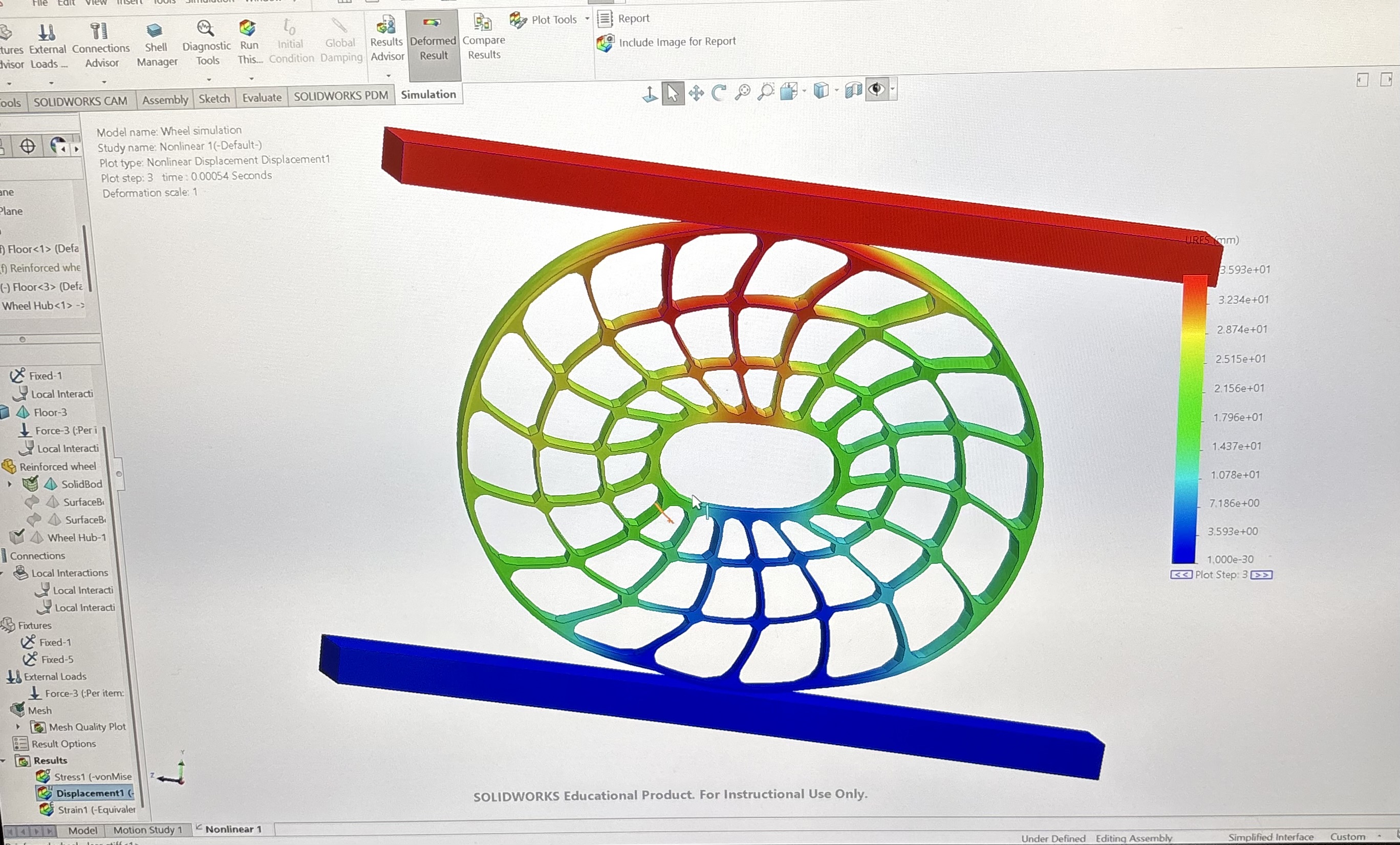
I tested multiple spoke geometries, iterating on spoke count, rib thickness, and hub interface to find a design that balanced stiffness, traction, and weight. I 3D printed fixtures to test deformation under load for various filament types, including different varieties of TPU-95A, and used those results to find the best filament for the final wheels. I also performed nonlinear FEA in Solidworks to compare the deformation between three different designs.
Result
After a design and material had been selected, I manufactured the wheels using a large format FDM 3D printer. The redesign resulted in stiffer, more maneuverable wheels that don't cause issues with the rover's life detection system. The new design reduced overall weight of the wheels by 400 grams.
The stiffer wheel is easier to control, with no negative impact on traction, and its deformation no longer hinders the rover's ground clearance.